



Frequently Asked Questions
A minor bridge has a total span of less than 60 meters.
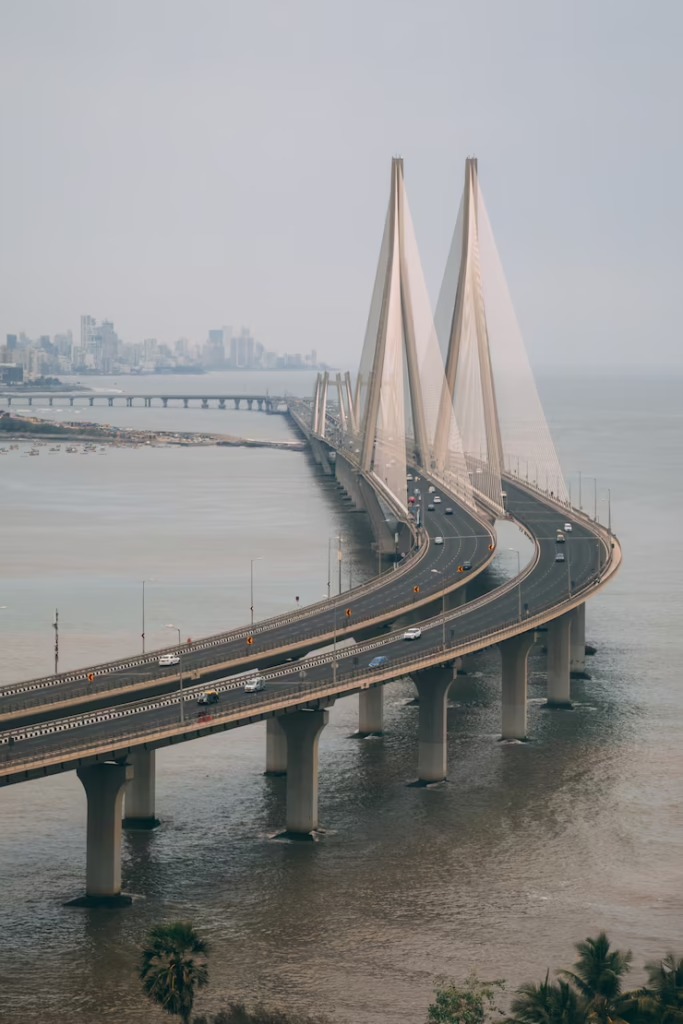
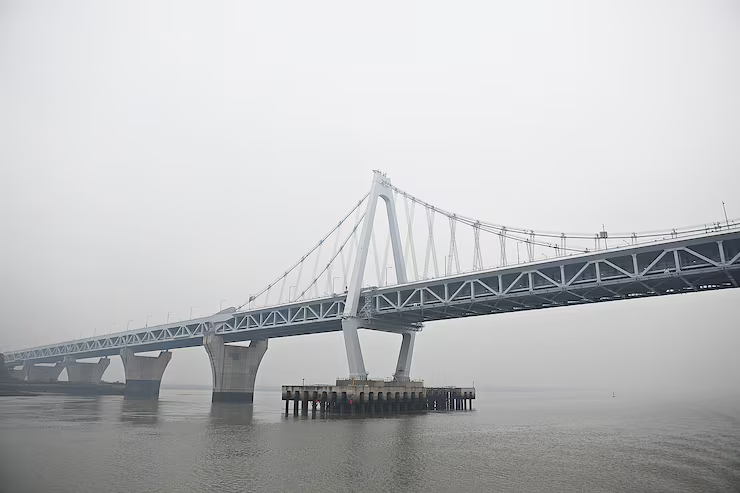
A major bridge has a span of 60 meters or more.
The classification is mainly based on the length and structural complexity of the bridge.
Minor bridges are typically used in rural areas, village roads, district roads, or secondary routes where traffic volume is low and the geographical spans are relatively short.
Major bridges are found on national highways, state highways, railways, and urban expressways, where they are designed to handle high traffic volumes and heavier loads.
Both types may use materials like reinforced concrete, steel, pre-stressed concrete, or composite materials, but major bridges often require advanced engineering techniques and stronger materials due to their size and load-bearing requirements.
Minor bridges are usually maintained by local authorities or municipal bodies.
Major bridges fall under the responsibility of state or central government agencies such as the Public Works Department (PWD) or National Highways Authority of India (NHAI).
Major bridges involve larger spans, complex designs, higher-grade materials, advanced construction techniques, and extensive safety features, all of which contribute to higher construction and maintenance costs.