Frequently Asked Questions
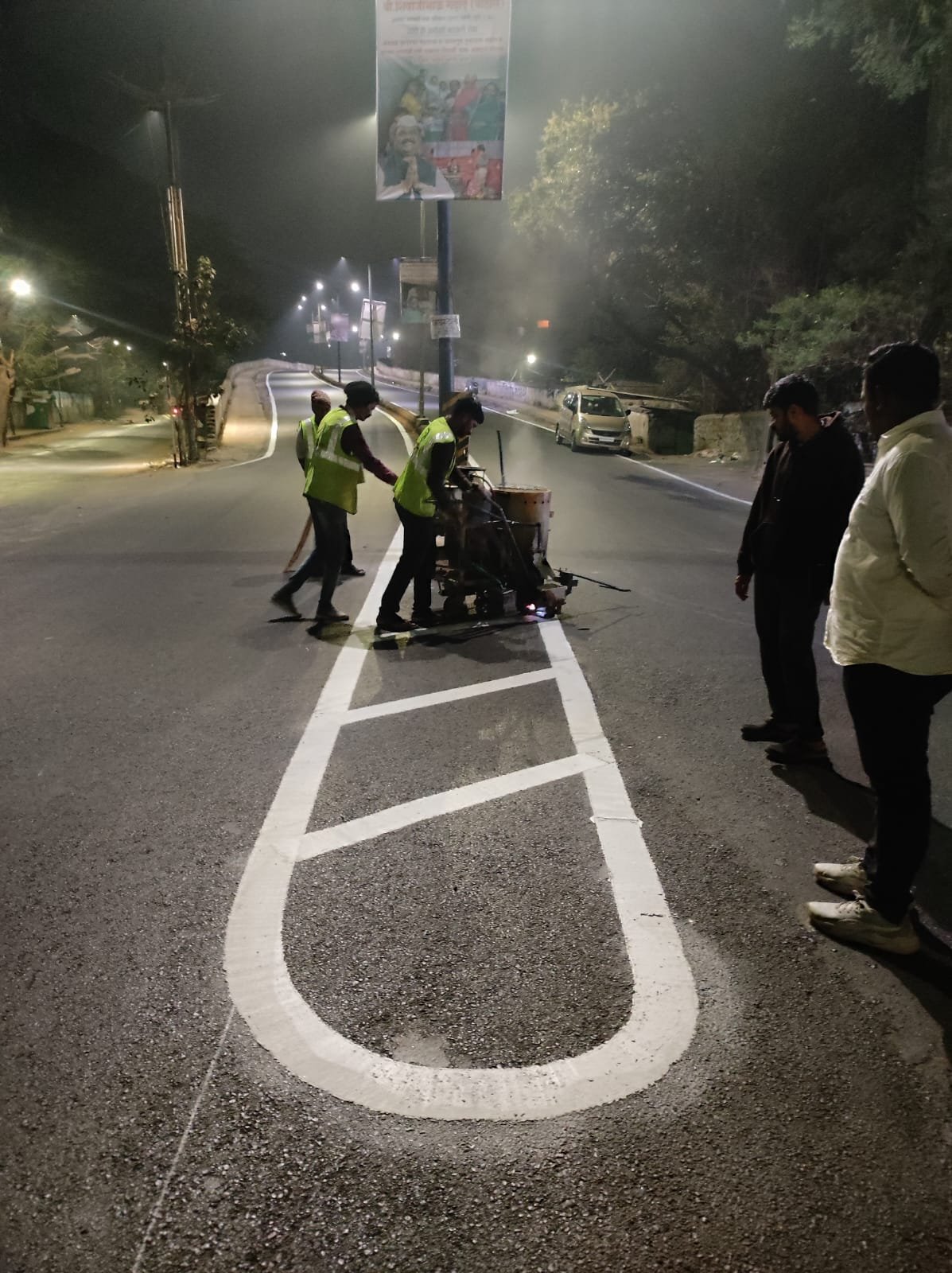
Thermoplastic road marking is a method of applying traffic lines and symbols on road surfaces using a heat-applied material. The material consists of pigments, resins, and glass beads that provide visibility, durability, and skid resistance.
The thermoplastic material is heated to a molten state (usually around 180–200°C) and then applied to the road surface using specialized equipment. It quickly cools and hardens, forming a thick, durable line or symbol.
Long-lasting and highly durable
Excellent night-time visibility due to glass beads
Skid-resistant for better vehicle traction
Quick drying and minimal traffic disruption
Resistant to water, oil, and UV rays
It is commonly used on highways, city roads, pedestrian crossings, parking lots, speed bumps, arrows, lane markings, and other traffic-related symbols and signs.
Thermoplastic markings can last 3 to 5 years, depending on traffic volume, weather conditions, and surface type. They last significantly longer than traditional paint markings.
Yes, most modern thermoplastic materials are formulated to be environmentally friendly. They are lead-free and comply with safety standards, though proper handling and application are necessary due to the high temperatures involved.